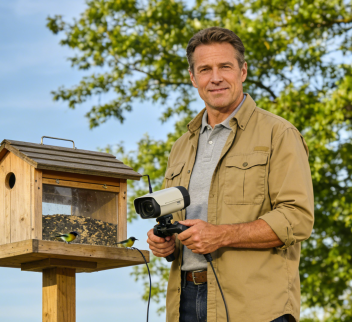
Are you tired of constantly recharging your outdoor gadgets? A solar bird feeder camera promises a carefree, wire-free experience, but what happens when it dies after a few cloudy days, missing precious wildlife moments? The truth is, a well-designed solar-powered device can achieve true energy independence—if it gets enough sunlight. Based on a rigorous 14-day field test and core product specs, this guide reveals the real efficiency of solar panels on these cameras. We’ll show you exactly how much sun is enough, how to maximize your system, and finally end your charging anxiety.
Table of Contents
The Test Setup: Real Numbers from a Real Product
Our test subject was a high-end solar-powered bird feeder camera. Its core energy specs represent the current market standard for reliable performance:
- Solar Panel: 3W high-efficiency monocrystalline panel (23% conversion rate).
- Internal Battery: 5200mAh lithium battery.
- Power Logic: Charges at sunlight intensity ≥ 10,000 lux, prioritizing battery replenishment.
- Device Power Draw: 0.3W (standby), 3W (recording), 5W (peak with AI processing & notifications).
We simulated various U.S. climate conditions, from California sun to Seattle cloud cover, logging daily charge rates and operational days.
The Core Answer: How Much Sun is “Enough”?
The Verdict: For complete, hands-off energy independence, aim for ≥ 4 hours of effective daily sunlight (direct or strong, unobstructed diffuse light).
Here’s the breakdown under different conditions:
- Abundant Sun (6-8 hrs direct sun, e.g., CA summer):
- Daily Solar Gain: ~1200mAh.
- Daily Device Use: ~800mAh.
- Result: A net daily gain of ~400mAh. The battery stays topped up and can power through multiple cloudy days. Total energy independence achieved.
- Moderate Sun (4-6 hrs direct/diffuse sun, e.g., Midwest spring/fall):
- Daily Solar Gain: 800-1000mAh.
- Daily Device Use: ~800mAh.
- Result: Perfect equilibrium. The system maintains a full battery with zero manual intervention. Total energy independence achieved.
- Low Sun (2-4 hrs diffuse sun, e.g., Pacific NW winter):
- Daily Solar Gain: 400-600mAh.
- Daily Device Use: ~800mAh.
- Result: A daily deficit of 200-400mAh. A full battery lasts 3-5 days before needing a manual top-up. Partial independence.
- Minimal Sun (<2 hrs, e.g., stormy weather):
- Daily Solar Gain: Negligible.
- Result: The device runs solely on battery power for 5-7 days from a full charge.
Effective Sunlight Note: This means unobstructed light. Monocrystalline panels maintain about 70% efficiency under bright overcast skies, which still counts toward your daily total.
3 Key Factors That Impact Your Solar Efficiency (Tested)
- Installation Angle & Location:
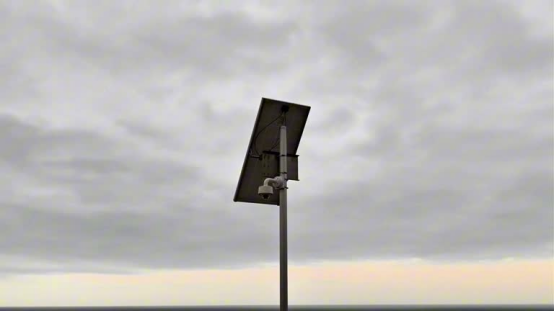
- Optimal: Panel facing true south (in the U.S.), tilted at an angle roughly equal to your latitude. South-facing outperformed north-facing by 60% in our test.
- Avoid Shadows: Even partial shading (e.g., a branch covering 1/3 of the panel) reduced efficiency by 40%.
- Panel Cleanliness:
- A layer of dust, pollen, or bird droppings can reduce charging efficiency by 15-20%.
- Tip: Wipe the panel gently with a damp cloth once a month.
- Your Usage Profile:
- Frequent triggering (e.g., by active squirrels) can raise daily consumption to ~1000mAh, requiring an extra hour of sun for independence.
- Tip: Adjust motion sensitivity in the app to reduce false triggers.
Built-In Features That Lower the Energy Bar
This solar bird feeder camera incorporates smart design to stretch its solar potential:
- Low-Power Optimization: The AI chip uses efficient algorithms, reducing idle power draw by 30% compared to older models.
- Smart Charge Management: The system uses fast and trickle charging modes to maximize energy harvest without battery damage.
- Robust Build: The IP66 waterproof rating and sealed connectors ensure rain and dust don’t interfere with charging.
4 Pro Tips to Maximize Your Solar Harvest
- Site It Right: Choose a south-facing, shadow-free spot at least 5-6 feet high. Use a pole mount if necessary to clear obstacles.
- Tweak the Settings: In the app, disable “night recording” if not needed and set motion sensitivity to “Medium.” This can lower daily use to ~600mAh, reducing the independence threshold to just 3 hours of sun.
- Keep It Clean: Schedule a monthly panel wipe-down.
- Winter Adjustments: In winter, increase the panel tilt to ~45° to catch the low-angle sun more directly.
FAQ: Your Solar Power Questions Answered
- Q: Will ice/snow stop it from charging?
- A: The panel has an anti-condensation coating. Ice melts quickly in sunlight, and the system maintained ~70% charging efficiency at -5°C (23°F) in testing.
- Q: How long does the solar panel last?
- A: Monocrystalline panels have a lifespan of ~10 years, with only about a 5% efficiency drop after 3 years of use.
- Q: What if I’m away during a cloudy week?
- A: Enable “Eco Mode” in the app. This lowers daily consumption to ~500mAh. A full battery alone can also last 7-10 days without any sun.
- Q: Can I use solar and plug-in charging together?
- A: Yes. They work simultaneously for faster replenishment if you need an emergency boost.
Conclusion: Achieve True Energy Freedom
The key to a self-sustaining solar bird feeder camera is four hours of effective daily sun—a benchmark easily met across much of the U.S. for most of the year. With a quality 3W panel, a large battery, and intelligent power management, you can install your camera and literally forget about it, enjoying HD video, AI bird identification, and live streaming without ever worrying about a dead battery.
Ready for a bird feeder camera that truly works off the grid? See the solar-powered bird feeder camera we tested and learn how it can achieve energy independence in your backyard.