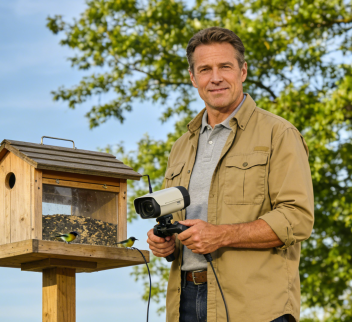
A flash of brilliant color darts through your morning backyard. Is it the iconic Northern Cardinal or the dazzling Rufous Hummingbird? Both are stunning, common visitors, but their similar vibrant hues can puzzle even keen observers. With a modern AI bird feeder camera, you don’t need to be an ornithologist. Combining 4MP HD video and professionally trained AI identification, it distinguishes between them in seconds, capturing their unique beauty and turning guesswork into guaranteed knowledge.
Table of Contents
The 3 Key Differences: A Quick Guide
1. Size & Posture: The Stately vs. The Acrobat
- Northern Cardinal: A medium-sized songbird (8-9 inches long) with a robust, full-bodied shape and a long tail. It perches upright and feeds with deliberate, calm movements—a true “red gentleman.”
- Rufous Hummingbird: A tiny jewel (3-3.5 inches long) with a compact, almost spherical body when perched. It’s a flying acrobat, capable of hovering, flying backwards, and darting with wings beating over 50 times per second.
2. Color & Markings: Solid Red vs. Metallic Fire
- Northern Cardinal: Males are a solid, rich scarlet red with a distinctive pointed crest and a coral-red bill. Females are warm tan with reddish accents in their wings, tail, and crest.
- Rufous Hummingbird: Males have a coppery-orange (rufous) back and a brilliant, iridescent orange-red throat patch (gorget) that flashes like fire in the sun. Females are green above with white underparts and often show orange speckles on the throat.
3. Feeding Behavior: Perch & Peck vs. Hover & Sip
- Northern Cardinal: Prefers seeds. It will perch solidly on a feeder ledge, using its strong conical bill to crack open sunflower or safflower seeds.
- Rufous Hummingbird: Lives on nectar. It hovers in front of a flower or feeder, inserting its long, slender bill and tongue to drink, never landing on the feeder itself. It’s a blur of motion.
How the AI Bird Camera Makes Identification Foolproof
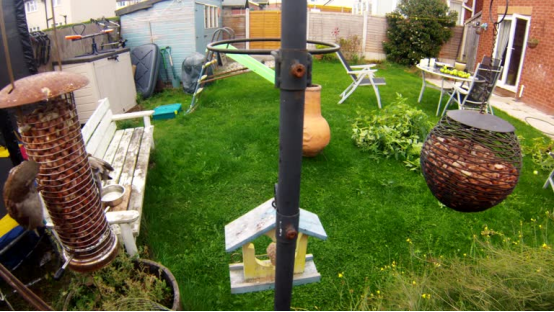
An AI-powered bird feeder camera doesn’t just take pictures; it analyzes them like an expert.
- HD Clarity Captures Crucial Details: The 4MP HD camera provides the resolution needed to see the fine details—the cardinal’s crest texture or the hummingbird’s iridescent throat feathers—even from a distance. This clear visual data is the foundation for accurate AI analysis.
- Trained AI Analyzes Multiple Features: The AI identification system doesn’t just look for “red.” It’s trained on a database of thousands of birds, checking for a combination of key traits: body shape, posture, bill shape, feeding behavior, and specific color patterns. It matches these against known profiles for cardinals and hummingbirds in milliseconds.
- Adapts to Real-World Conditions: With features like full-color night vision and wide dynamic range, the camera compensates for poor lighting (dawn, dusk, shade) to present a true-color image to the AI, preventing misidentification due to shadows or glare.
Pro Tips to Attract and Film Both Species
To get the perfect side-by-side comparison in your own yard:
- For Cardinals: Use a hopper or tray feeder filled with their favorite black oil sunflower seeds or safflower seeds. Ensure there are sturdy perches nearby.
- For Hummingbirds: Hang a dedicated nectar feeder filled with a simple sugar solution (1 part white sugar to 4 parts water, no dye). Place it in an open area for easy approach.
- Camera Placement: Position your bird feeder camera to have a clear view of both feeding stations. A height of 5-6 feet is ideal. Ensure the lens is clean for optimal HD video quality.
- Optimize Settings: Enable motion activation with high sensitivity to capture the hummingbird’s rapid visits. Use the “bird identification alert” feature to get instant notifications with the species name.
Beyond Identification: Enhancing Your Experience
A great bird feeder camera offers more than just a name. It can log how often each species visits, the time of day they appear, and even let you listen to their calls through two-way audio. You can compile a digital scrapbook of your cardinal’s daily routines and the hummingbird’s migratory pit stops, all stored securely on a microSD card or in the cloud.
Conclusion: Your Instant Backyard Bird Guide
The vibrant red of a cardinal and the fiery orange of a hummingbird are now easy to tell apart. With an AI bird feeder camera, the guesswork is eliminated by technology that captures, analyzes, and identifies your visitors in real time. It deepens your connection to backyard nature by providing not just a sighting, but a story.
Ready to never mistake a cardinal for a hummingbird again? Discover how an AI bird feeder camera with HD video and instant identification can transform your birdwatching.