
The greatest frustration in bird watching isn’t missing a visitor—it’s capturing a blurry image where a rare bird’s defining features are lost in a pixelated mess. As more smart bird feeder cameras tout 2K resolution (2560×1440), a key question arises: Is this a marketing gimmick or a genuine upgrade for serious enthusiasts? By comparing real-world footage and examining the technical advantages, we’ll demonstrate how 2K resolution is the definitive choice for capturing feather-level detail, dramatically improving both AI identification accuracy and your overall viewing experience.
Table of Contents
The 2K Advantage: It’s All in the Pixels
At its core, 2K resolution offers a 78% increase in total pixels compared to standard 1080p. This higher pixel density translates directly to superior image clarity and resolving power, which is critical for the fine details that define bird species.
| Resolution | Total Pixels | Key Impact on Bird Details |
|---|---|---|
| 1080p (Full HD) | ~2.1 Megapixels | Shows general color and shape. Fine textures (barbs on feathers, tiny markings) become soft or merge into color blocks when zoomed. |
| 2K (Quad HD) | ~3.7 Megapixels | Reveals individual feather strands, iridescent sheens, and minute spot patterns. Provides the sharp data AI needs for precise analysis. |
3 Unbeatable Benefits of 2K for Bird Watching
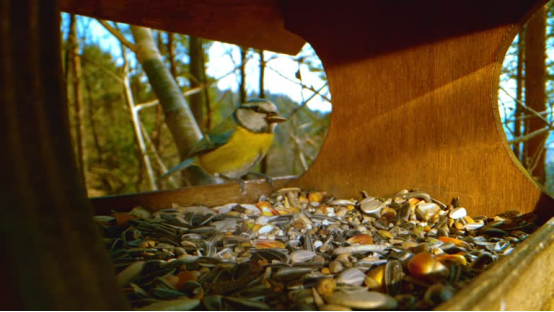
1. Captures Crucial Markings for Accurate AI Identification
Many species are distinguished by minuscule details. The scalloped pattern on a Mourning Dove’s feather, the fine streaking on a House Finch’s breast, or the exact shape of a goldfinch’s wing bar—these are often blurred at 1080p.
- Real Impact: A bird feeder camera with 2K provides the AI system with crisp, unambiguous data. This can raise identification accuracy for tricky or similar-looking species from ~85% to over 95%, turning “maybe” into a confident ID.
2. Preserves True Color & Texture
Birding is about beauty, and 2K resolution faithfully reproduces it.
- Iridescence & Metallics: The shimmering gorget of a hummingbird or the oily sheen of a grackle’s feathers show their true, dynamic color shifts in 2K, which can appear flat or muted in 1080p.
- Low-Light Fidelity: With a larger sensor and better processing, a quality 2K camera maintains detail with less noise in dawn, dusk, or shaded conditions, preserving subtle feather patterns that 1080p would lose to grain.
3. Enables Powerful Digital Zoom Without Quality Loss
You can’t always mount the camera inches from the perch. 2K’s high pixel count allows you to digitally zoom or crop into a portion of the frame and still retain a usable, detailed image.
- Use Case: Spot a wary Pileated Woodpecker at the edge of the frame? Crop in on its distinctive facial pattern. With 1080p, the same crop would reveal a blurry, unrecognizable patch of pixels.
Real-World Scenarios Where 2K Makes the Difference
- Telling “Look-Alikes” Apart: Differentiating a Black-capped Chickadee from a Carolina Chickadee hinges on minor wing feather details and subtle color gradients—a task made for 2K.
- Documenting Behavior & Molt: Observe the intricate process of feather preening or clearly document molt patterns as new feathers grow in—details essential for deeper learning.
- Creating Share-Worthy Content: For social media or personal records, 2K video and stills provide a professional, crisp quality that stands out, making your sightings more impactful and enjoyable to revisit.
The Supporting Tech That Makes 2K Shine
A true smart bird feeder camera leverages more than just resolution:
- Wide Dynamic Range (WDR): Balances bright skies and shaded perches, ensuring details aren’t lost in shadow or highlight.
- Quality Night Vision: Full-color or sharp infrared night vision ensures detail capture doesn’t stop at sunset, crucial for owl or nocturnal visitor identification.
- Fast Trigger Speed: Coupled with sharp motion detection, it freezes the action of a hummingbird’s wings or a bird in flight without motion blur.
FAQ: Addressing Practical 2K Concerns
- Does 2K drain the battery faster? Marginally. Modern processing is efficient. The difference is often less than 10% and is easily offset by a quality solar panel.
- Do I need special equipment to view 2K? No. The companion app typically streams at an adaptive resolution for smooth viewing on any device. You can download or view the original 2K file when you want full detail.
- Does it use more storage? Yes, files are larger. However, support for high-capacity microSD cards (256GB+) and smart features like “save only identified events” make storage management effortless.
Conclusion: The Clear Choice for Detail-Oriented Birders
For the casual observer, 1080p may suffice. But for anyone who values precision—whether for accurate AI-powered bird identification, appreciating the finer points of plumage, or creating a high-quality visual journal—a 2K bird feeder camera is a fundamental upgrade. It transforms your feeder from a simple observatory into a detailed field research station, ensuring no feather, pattern, or color goes unseen.
Ready to see every detail nature offers? Explore a smart bird feeder camera with true 2K resolution and see the difference clarity makes.