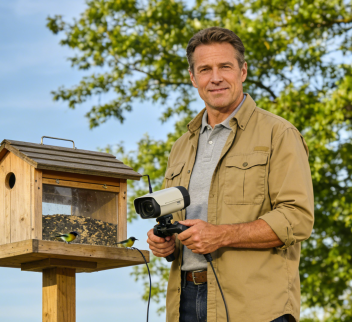
Dreaming of a bird watching haven in your remote backyard, only to be defeated by weak Wi-Fi? Standard cameras either drop offline constantly, miss every visitor, or need such frequent recharging that the hobby becomes a chore. For truly secluded spots, a standard bird feeder camera simply won’t cut it. The solution isn’t a stronger Wi-Fi signal—it’s a camera designed for independence. A solar-powered bird feeder camera is the definitive answer for remote locations, combining off-grid energy with smart local storage to deliver a seamless experience where other cameras fail.
Table of Contents
Why Standard Cameras Fail in Remote Locations
In areas with weak signals, conventional cameras face two crippling flaws that a solar-powered model directly solves.
The Standard Camera Trap:
- Constant Offline Status: With a poor Wi-Fi connection, the device struggles to stay online. You miss live viewing, get delayed notifications, and crucial footage of rare birds is lost when the connection drops entirely.
- The Battery Death Spiral: A weak signal forces the camera to work harder to maintain a connection, draining its battery rapidly. In a remote spot, recharging means a tedious trek with a ladder and tools, turning leisure into labor.
The Solar-Powered Advantage:
- True Energy Independence: With a high-capacity battery (e.g., 5200mAh) and an efficient solar panel, just 4 hours of daily sun can sustain operation indefinitely. It harvests energy autonomously, freeing you from the recharge cycle.
- Works Flawlessly Offline: Equipped with local microSD storage (up to 128GB), it records all motion-triggered events directly to the card. When the Wi-Fi signal is available, it seamlessly syncs the backlog to your app. You miss nothing.
Built for the Wild: Features That Thrive Off the Grid
Solar power is just the start. This camera is engineered for the demands of a remote installation.
1. Installation Freedom
Forget being chained to your router’s signal radius. With versatile mounting options (pole, tree, wall), you can install it in the perfect spot for birds and sunlight, not just for Wi-Fi. Its wide-angle lens ensures full coverage of the feeding area.
2. Rugged, Set-and-Forget Design
Remote means exposed. This bird feeder camera is built to withstand the elements.
- IP66 Weatherproofing: Fully sealed against rain, dust, and snow.
- Extended Temperature Range: Operates reliably from freezing winters to hot summers.
- Durable Materials: Constructed to resist UV degradation and minor impacts.
3. Full Features, No Compromises
A remote location doesn’t mean a downgraded experience.
- Crisp 2K Video & Color Night Vision: Captures stunning detail day or night, from feather patterns to nocturnal visitors.
- Local AI Bird Identification: Advanced models can process common species directly on the device using an on-board AI chip, providing identifications without needing a cloud connection.
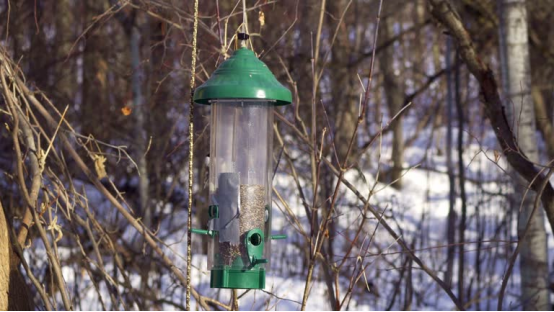
- Large Seed Capacity & Pest Defense: A big hopper means fewer refill trips. Integrated squirrel deterrents protect your feed investment.
Why It’s The “Only” Choice: Comparison Breakdown
| Solution | Core Problem for Remote Use | Solar Camera Advantage |
|---|---|---|
| Standard Wi-Fi Camera | Frequent disconnects, short battery life. | Self-charging, records offline. |
| Wi-Fi Extender | Limited range, extra cost, obstructions block signal. | Doesn’t rely on extended Wi-Fi. Zero extra hardware. |
| Wired Camera | Impossible/impractical to run power & data cables. | 100% wireless, installs anywhere with sun. |
| Low-Power Camera | Still requires manual charging, struggles in weak signal. | Solar continuously offsets power use for stable uptime. |
FAQ: Your Remote Backyard Questions Answered
- What if my backyard is shady?
Modern monocrystalline solar panels are highly efficient, charging even in bright overcast conditions. The large battery provides a buffer for several days of low light. - How do I get my photos if the Wi-Fi is weak?
All media is stored securely on the microSD card. You can physically retrieve the card, or the camera will automatically upload the backlog when a temporary, stronger signal is available (e.g., when you use a phone hotspot nearby). - Is maintenance difficult in a remote spot?
It’s designed for minimal upkeep. Primary tasks are refilling seed (less often with a large hopper) and occasionally wiping the solar panel. Its durability means you won’t be retrieving it for repairs. - Will it work in winter or extreme temperatures?
Yes. Quality models are rated for sub-freezing to high-heat operation. Solar panels still generate power in winter, though at a reduced rate, and the battery is sized to compensate.
Conclusion: Reclaim Your Remote Sanctuary
A remote backyard should be a retreat, not a technical headache. A solar-powered bird feeder camera is the only system that solves the fundamental challenges of power and connectivity, allowing you to enjoy wildlife observation without compromise. It delivers peace of mind, stunning footage, and the simple joy of discovering who visits when you’re not around.
Turn your secluded space into a vibrant bird sanctuary. Explore the solar-powered bird feeder camera built to perform perfectly in your remote backyard.