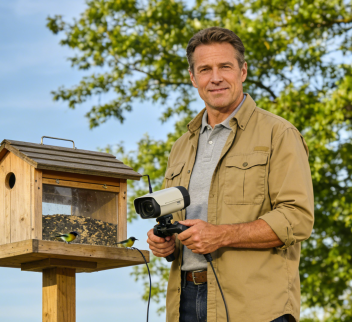
The common worry with solar-powered devices is simple: what happens when the sun disappears? A quality solar bird feeder camera is engineered for this exact challenge, combining high-efficiency solar capture with intelligent power management to deliver consistent operation, even during overcast and rainy periods. Using the Solar Powered Bird Feeder Camera as a case study, we break down the three pillars of its reliable solar system.
Table of Contents
Pillar 1: The Solar Panel – Advanced Light Capture, Not Just Collection
The panel is the frontline energy harvester. A premium solar bird feeder camera uses a monocrystalline silicon panel (not the less efficient polycrystalline type).
- High Conversion Efficiency (18-22%): This means it converts more sunlight into electricity, even from the weaker, diffused light of a cloudy day. It can generate useful power from dawn to dusk, not just in direct noon sun.
- Durable & Weather-Resistant: Sealed to the same IP66 waterproof rating as the camera body, it withstands rain, snow, and dust. An anti-reflective coating maximizes light intake and allows rain to sheet off, carrying away dirt.
- Optimal Sizing: A 3W panel is carefully matched to the camera’s average daily power consumption, ensuring it can typically recharge the battery during daylight hours.
Pillar 2: The Brain – Intelligent Charge & Power Management
This is the system’s hidden intelligence, a circuit that manages every milliamp of power.
- Smart Charging: A dedicated MCU (Microcontroller Unit) regulates the flow from the solar panel to the 5200mAh lithium-ion battery. It prevents overcharging (which damages batteries) and optimizes charging in cold weather.
- Dynamic Power Allocation: The system doesn’t just run flat-out. It adjusts power draw based on activity:
- Standby (No Motion): Draws minimal power, maintaining only Wi-Fi and sensor readiness.
- Active (Live View/Recording): Allocates full power for 2K video, AI detection, and data transmission.
- Low-Power Protection: If battery levels drop critically low, the system can automatically switch to an ultra-economy mode, shutting off live streaming to preserve energy for essential motion-triggered recording.
Pillar 3: The Reserve – The High-Capacity Battery Buffer
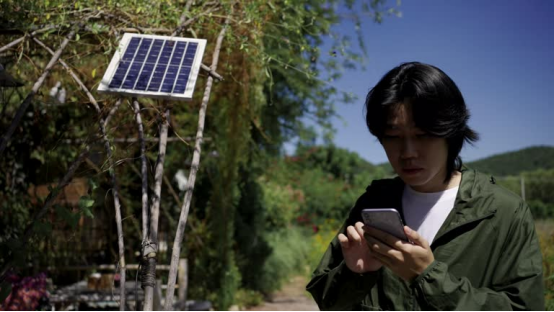
The battery is the “rainy day fund,” storing surplus solar energy for when it’s needed most.
- Substantial Capacity: A 5200mAh battery provides a significant buffer. In tests, a fully charged unit can operate for 5-7 days on battery alone with no solar input, covering most stretches of inclement weather.
- Long-Life Chemistry: Quality batteries support 2000+ charge cycles, ensuring years of reliable service before any noticeable capacity degradation.
The Rainy-Day Strategy: How It All Works Together
Reliability in bad weather isn’t magic; it’s a calculated design:
- Sunny Day: The efficient panel fully recharges the large-capacity battery, often creating a surplus.
- Cloudy/Rainy Day: The panel still captures diffuse light, providing a trickle charge that dramatically extends battery life. The system simultaneously activates power-saving protocols (e.g., reducing video bitrate, filtering false triggers from rain drops).
- Long-Term Outlook: The combination of daily solar top-ups (even on cloudy days) and the large battery reserve means the camera can weather typical multi-day storms without issue.
Real-World Performance & FAQs
- Q: What if it rains for a full week?
- A: With a full battery charge, it will run for 5-7 days. Any brief periods of daylight during that week will extend this further. For extreme cases, a backup USB-C port allows manual charging.
- Q: Does dirt on the panel stop it from working?
- A: Its smooth, water-shedding surface is designed to stay relatively clean. A significant buildup might reduce efficiency by ~10%, but rain often cleans it. Wiping with a damp cloth restores full performance.
- Q: Will the battery degrade over time?
- A: All batteries gradually lose capacity. A quality unit like this is designed to retain ~80% capacity after 3 years of daily use, ensuring long-term rainy-day performance.
Conclusion: Reliable Power is an Engineering Achievement
A well-designed solar bird feeder camera is a finely tuned system. It doesn’t merely hope for sun; it efficiently harvests available light, stores it intelligently, and spends it wisely. This engineering transforms solar power from a fair-weather novelty into a genuinely reliable, hands-off power source for year-round bird watching.
You can stop worrying about the weather and start enjoying the birds.
Discover the solar-powered bird feeder camera built for all-weather reliability.